
AVVAIS
Africa Value-Added Innovation Solutions
Africa Value-Added Innovation Solutions
Transforming organic and chemical waste into valuable resources for sustainable agriculture
Our flagship project addresses critical environmental challenges through innovative waste management solutions. The thermophilic composting system transforms organic waste into valuable compost while safely managing chemical wastes that pose risks to communities and ecosystems.
This integrated approach combines Bio-Reactor Composting and Thermophilic Composting technologies to provide scalable solutions for smallholder farmers, agribusinesses, and industrial partners.
The project represents our commitment to sustainable development that protects the environment while creating economic opportunities for communities across Rwanda.
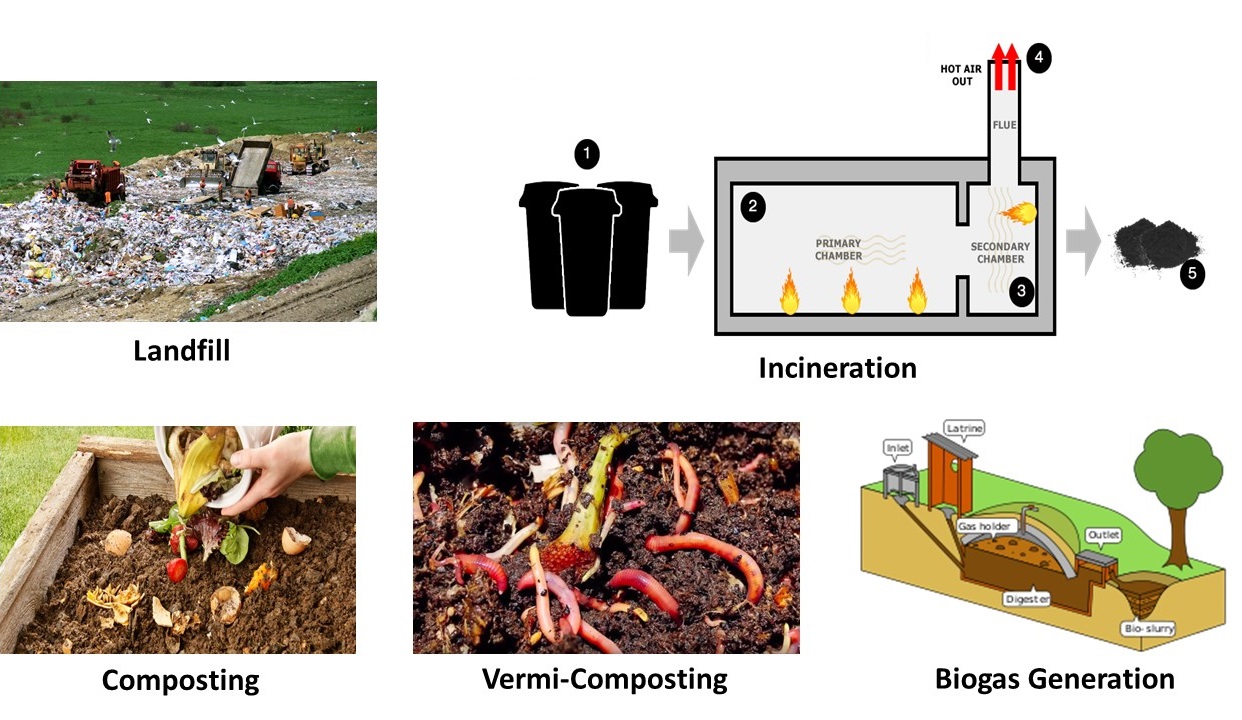
The Bio-Reactor Composting System focuses on the controlled microbial fermentation of fresh livestock manure, crop residues, and other farm-generated organic wastes. Utilizing a consortium of beneficial bacteria, fungi, and actinomycetes, the system accelerates the breakdown of cellulose, hemicellulose, and lignin, producing a nutrient-rich, mature compost.
Key excipients such as moisture regulators, pH buffers, and bio-stimulants optimize the fermentation environment, ensuring consistent microbial activity and high-quality compost output.
The bio-reactor's design features precise control of temperature, aeration, and mixing, enabling modular scalability suitable for diverse agricultural operations.
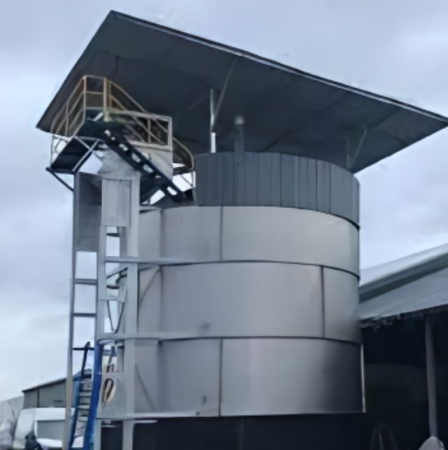
The Thermophilic Composting System employs high-temperature aerobic decomposition (50°C–70°C) to rapidly degrade organic matter, eliminate pathogens and weed seeds, and stabilize low to moderate concentrations of chemical residues from agrochemicals, veterinary pharmaceuticals, and industrial effluents.
Thermophilic microorganisms dominate under these conditions, facilitating both organic matter transformation and the immobilization or detoxification of chemical compounds.
The system incorporates insulated composting reactors with automated monitoring of temperature, moisture, aeration, and pH to maintain optimal conditions.
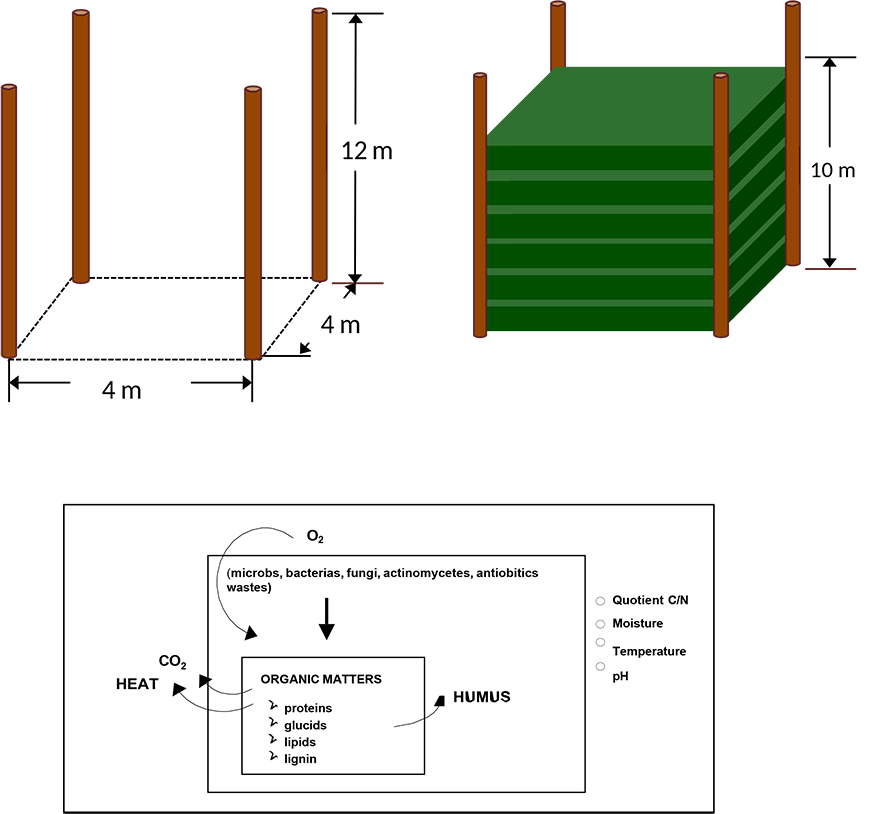
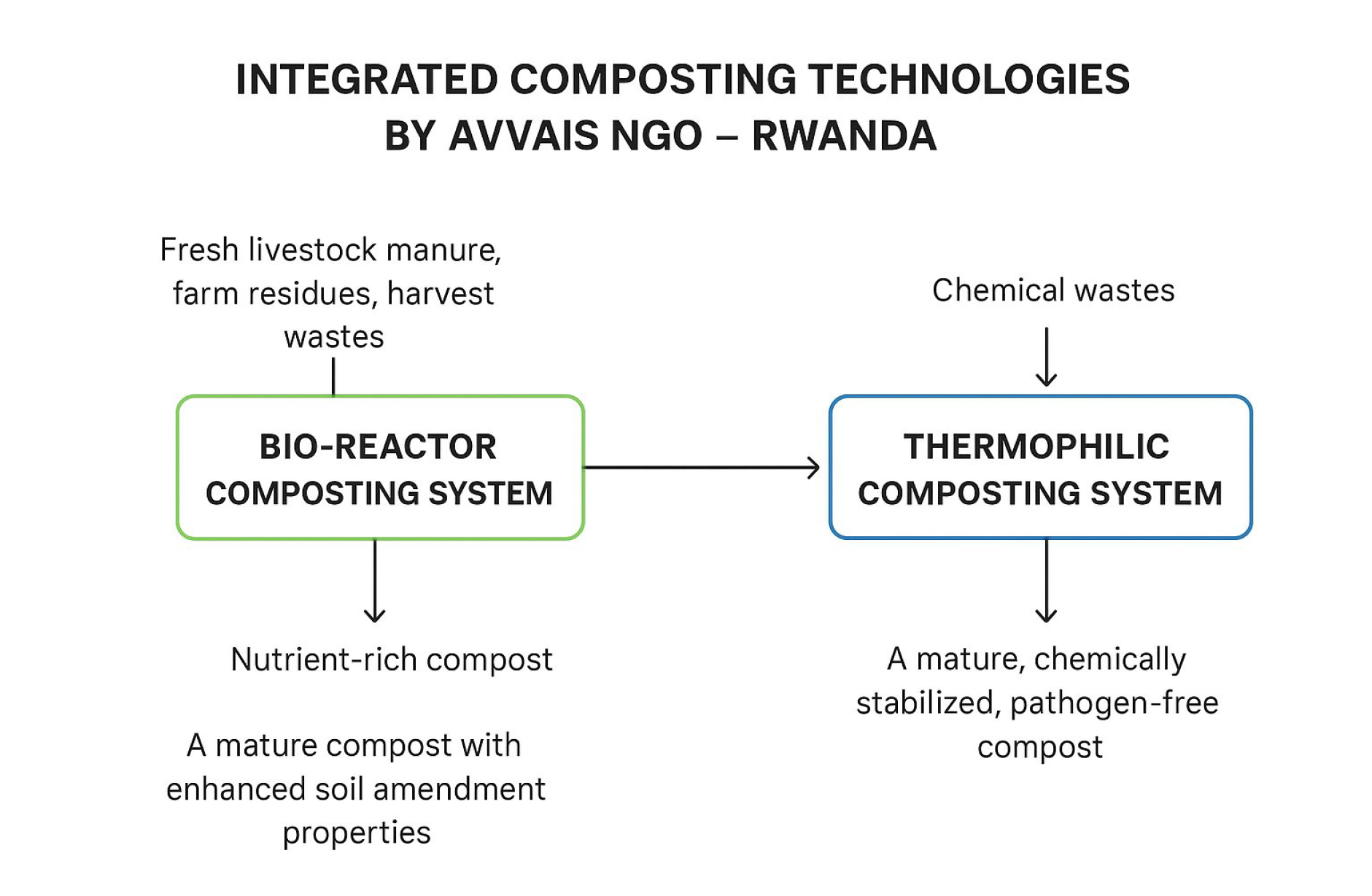
The integrated system processes organic matter and chemical wastes through controlled microbial activity, producing safe, nutrient-rich compost.
Converts organic and chemical wastes into valuable resources, reducing landfill waste and environmental pollution.
Produces nutrient-rich compost that enhances soil fertility, structure, and microbial activity.
Decreases reliance on imported chemical fertilizers, promoting sustainable agricultural practices.
Creates economic opportunities and builds local capacity for sustainable waste management.
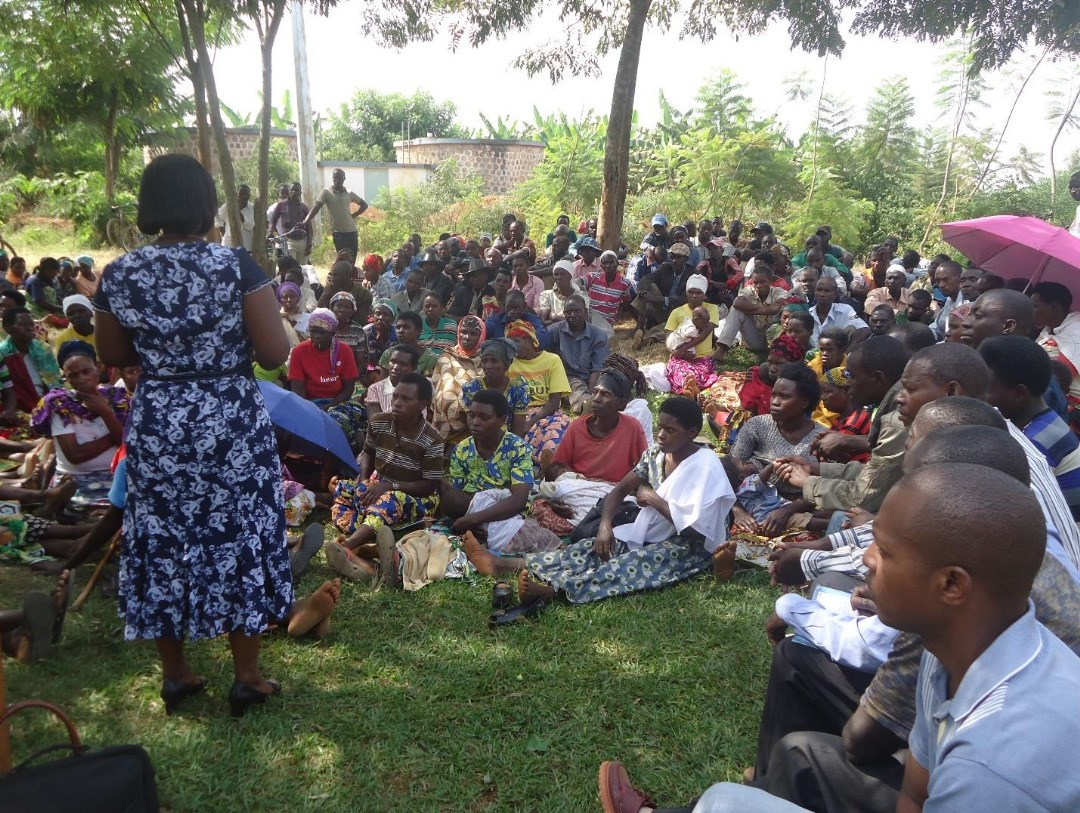
AVVAIS conducts training programs across Rwanda to support sustainable, climate-resilient livelihoods for smallholder farming households. These initiatives deliver multiple societal and environmental benefits, including increased soil fertility, improved nutrient cycling, reduced waste to landfills, and decreased greenhouse gas emissions from organic waste.
As part of this program, AVVAIS trained members of the COASPA Cooperative (Cooperative Agro-Sylvo-Pastorale) in Bugesera, Eastern Province, on sustainable composting and locally-adapted nitrogen-phosphorus-potassium (N-P-K) fertilizer production.
The training emphasizes the use of locally available resources, including leguminous plants, Tithonia diversifolia, kitchen ashes, livestock manure, agricultural residues, volcanic rock, and soil.
Help us expand this sustainable waste management solution to more communities across Rwanda and beyond.
Get Involved Contact Us